Paramedic
- Primary Care Paramedic, BCEHS
- Former BCEHS Unit Chief and I/Director of Research and Innovation
- COVID-19 frontline response
- BCEHS Handbook + CPGs
Scientist · Technologist · Paramedic
Building technology for complex emergencies.
From opioid crises and pandemics to disasters, rural health, and food security — 20+ years bringing data, devices, informatics, and field operations together where it matters most.
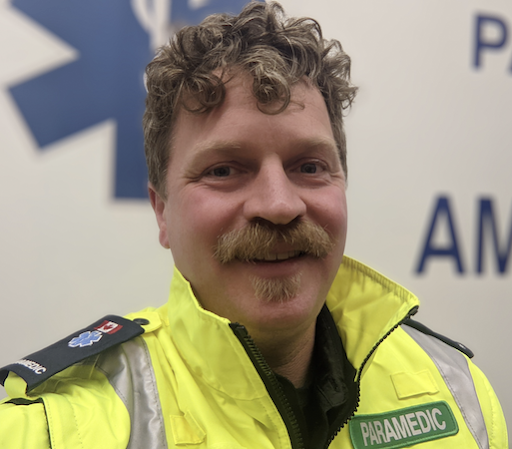
I'm Nico Preston, PhD — a scientist, technologist, and paramedic ("data medic" for short). My career has spanned five sectors — academia, nonprofit, corporate, government, and startup. For 20+ years I've built data and technology for complex emergencies — opioid crises, pandemics, natural disasters, rural health systems, and food security. I use 'complex emergencies' broadly — to mean any health system, community, or population under sustained operational stress, whether acute crisis, chronic stressor, or slow-burn shock. From the frontline as a paramedic during COVID, to digital disease detection during Ebola, to harm-reduction and supply-chain tooling during the toxic drug crisis: appropriate technology, deployed where it's hardest to ship. I work as a data scientist, but more broadly as a technologist — IoT and devices, software, hardware, networks, radio comms, and the full range of health informatics and data engineering. Currently focused on rural and emergency health in BC, with continued interest in appropriate technologies for low- and middle-income countries. I advise senior leadership across the BC health system, government services, and emergency systems on data infrastructure, AI strategy, and innovation. Working across English, French, and Spanish — at the frontline, in data, and in leadership.
Access and delivery designed for the people most often left out — rural, remote, and underserved communities.
Built for the operating reality where it lives — rural BC stations, smallholder farms, LMIC clinics. Beyond lab metrics or whiteboard architecture.
Architectures and workflows that hold up under emergencies, pandemics, and shocks to supply.
Frontline credentials informing every system I build.
Currently focused on rural and emergency health in BC. Continued interest in how appropriate technologies can be leveraged in low- and middle-income countries.
Chief Data Scientist at the Rural Coordination Centre of BC — data and technology support for rural clinicians and communities, with a focus on access, delivery, equity, and patient transport.
Data Scientist on the PHSA DARE team, integrating data across BC health systems on the PANDA platform — with domain expertise in emergency health data.
Interim Director of Research and Innovation — quality, research, informatics, and Clinical Performance Indicators.
Built low-cost water treatment systems, water monitoring programs, WASH education, supported a network of water researchers in Central America, and worked on water-related disease in low- and middle-income countries. Same problems, different operating context.
Regenerative farmer and FarmTech founder in rural BC, Canada — building software, IoT, and hardware that make diversified farming more productive and less guesswork.
A 10-acre regenerative farm in BC, Canada, producing pastured livestock, nursery stock, and artisan fruit. The farm is both the business and the lab.
Operational software built for the realities of diversified small farms — planning, tracking, and decisions that one-size-fits-all farm software misses.
On-farm sensors and hardware tooling that bring real measurement to operations historically run on intuition.
Systems that hold up under emergencies, pandemics, and supply shocks.
Health access and delivery designed for those most often left out.
Built for live operations and frontline reality — not a lab benchmark.
Rural BC ambulance bays, smallholder farms, LMIC clinics — the operating problems of complex, resource-constrained systems are remarkably similar.
Companies and initiatives I've founded or led — past and current.
Health informatics startup spun off from Boston Children's Hospital. Shipped public-facing tools including StreetRx, Poison Help, and the FDA Supply Chain Map. Scaled biosurveillance software through acquisition by Booz Allen Hamilton.
Emergency health performance evaluation and innovation in satellite and communications technology.
Technology studio focused on rural, agricultural, and emergency health technology.
A few moments where the technology met the moment.
Digital disease detection in support of the global response to the 2014 Ebola epidemic in West Africa, while a Research Fellow at Harvard / Boston Children's Hospital.
Surveillance and harm-reduction tooling spanning Epidemico and Booz Allen Hamilton: StreetRx (street-price reporting), Poison Help, the FDA Supply Chain Map, and contributions to the Peer Alerting Lifeline (PAL) for peer-led overdose response.
Geospatial situation awareness and scientific computing for the global response, alongside UW-Madison's Hacker Within community.
Won a food security innovation pitch competition; awarded a sabbatical with the Singularity University Global Solutions Program at NASA Ames, sponsored by Google.
Managed a remote nonprofit biological research station in BC. Disease ecology, ectoparasites, salmon health; mentored undergraduate, graduate, and Indigenous youth in field research.
Technical support for paramedic field handbook content; development of Critically Appraised Topics, Clinical Practice Guidelines, and training materials used provincewide.
Built a water treatment system; supported global infectious-disease biosurveillance systems and networks of physicians; supported a network of water researchers in Central America; worked on infectious and water-related diseases in low- and middle-income countries. Co-authored a Spanish-language field guide on engaging communities in water, sanitation, and health projects (also available in English and French).
Academic homes spanning undergraduate, graduate, postdoctoral, and adjunct appointments — across Canada, France, the United States, and Guatemala.
Selected talks and panels.
Exploring how advances in data analytics and artificial intelligence are transforming health system decision-making — moving from information overload to actionable, optimized clinical and operational intelligence.
A grand rounds presentation examining how data science and AI can be woven into rural and remote health systems in ways that honour relationships and community context — moving beyond technical solutions toward meaningful, equitable innovation.
Selected interviews and a public talk.
On AI in pre-hospital care — dispatch algorithms, diagnostics, demand profiling, and what's coming for patient care.
On the Peer Alerting Lifeline — peer-led overdose response tooling for the toxic drug crisis.
Bridging large-scale data analytics with practical, deployable devices for global health.
Seven years of British Columbia's opioid public health emergency — 11,600+ overdose deaths since 2016 — and rising drug toxicity.
The case for nasal naloxone — a more accessible delivery method for reversing opioid overdoses.
I work as a data scientist, but more broadly as a technologist — across data, devices, and the field operations that need them.
Open to contracts, fractional CTO roles, advisory work for government and emergency services, speaking, and media.